Hello, People!
What I’m going to discuss here are common mistakes in four popular art subjects, but I want to make one thing clear first. These are mistakes only if the goal is realism. Surrealism, symbolic choices, choices in favour of atmosphere, or just intentional artistic choices for whatever reason cannot be considered as mistakes. Okay?
Let’s start!
The Moon and the Sun
Scientific question: Which is bigger in the sky we see, the full moon or the sun?
The correct answer is neither. They have the same size. That’s why in a total solar eclipse the moon perfectly and barely covers the sun. If the moon was larger an annual solar eclipse would be impossible. If the sun was larger, a total solar eclipse would be impossible.
It’s a common occurrence, though, in art to depict the sun tiny and the full moon huge. Once again, if this is a choice for the atmosphere of the image, that’s alright – the full moon can be quite an impressive subject, so why not give it the “big role” it deserves?
The painting here (created by me) shows one such huge full moon. Well, of course the protagonist of the painting was always intended to be the beautiful nude guy looking at the moon.
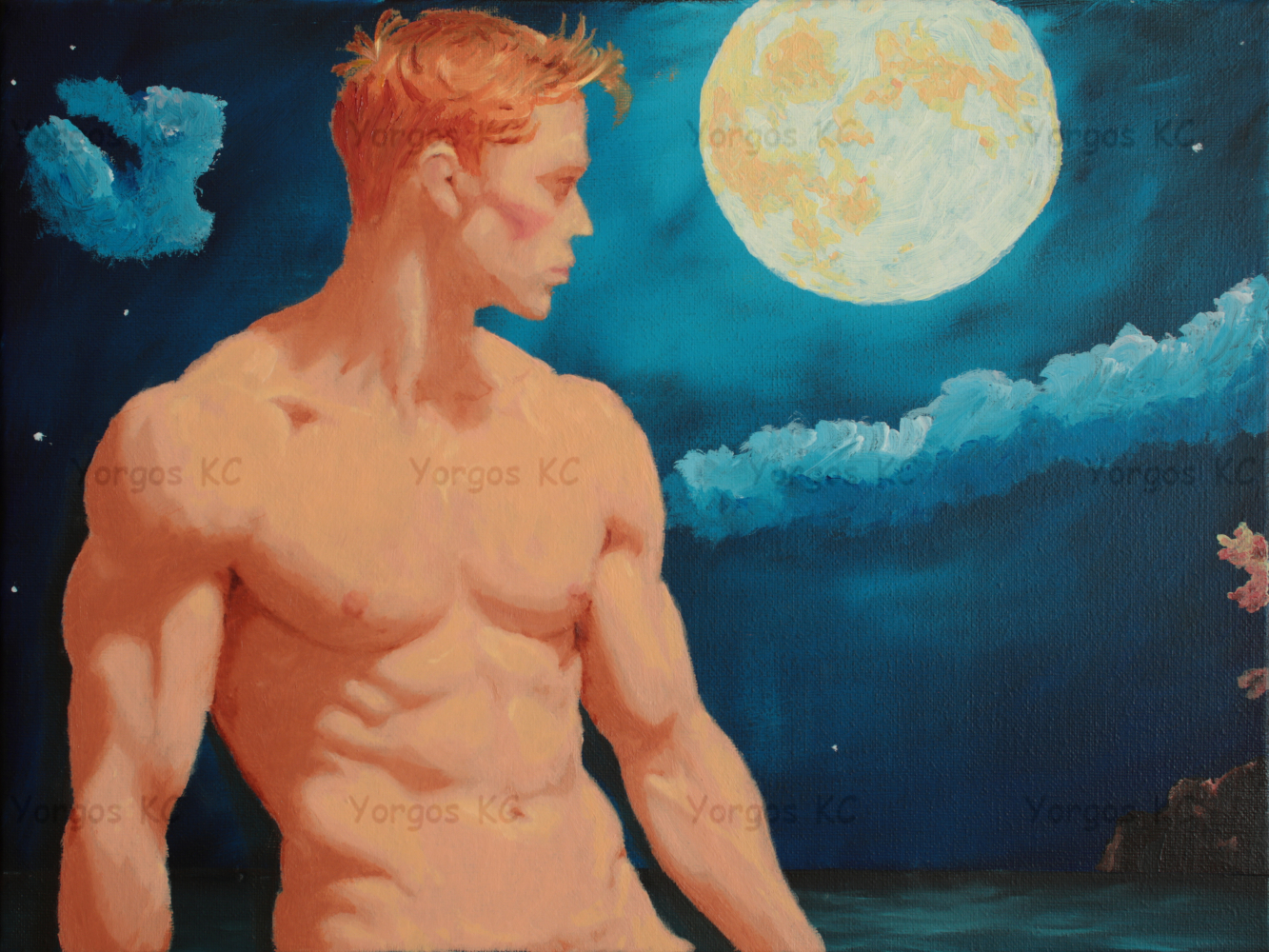
At first glance this painting seems to have two other more serious mistakes. The perspective is a bit off and the light on the guy seems wrong. He receives the light from the front, not from the back where the full moon is – not to mention, it’s quite intense. But if you look at the image a bit more carefully, the guy casts his shadow on the seascape. I know the small size doesn’t help so here is a close up.
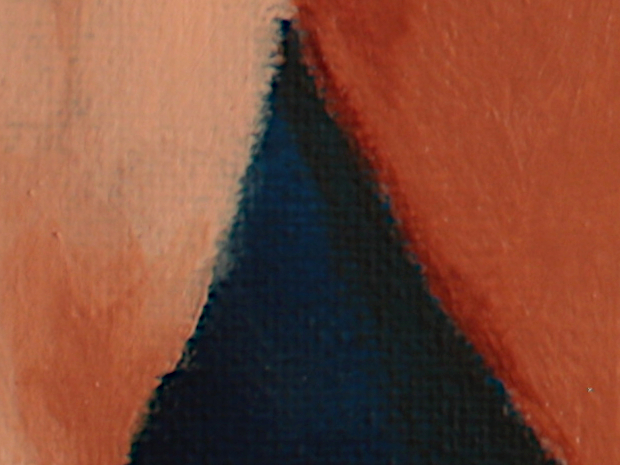
Yes, in fact this is a painting of a nude guy sitting in front of a painting of a moonlit seascape.
Back to my subject. Another common mistake with moons is that when the moon isn’t full, and especially when it’s a very small crescent moon, many add stars where the shadowed moon disk should be. That, though, can’t happen in reality, because the moon disk is still there, and it’s closer to us than the stars. Therefore, it covers them.
Sunset
That’s an awesome subject. There are so many pinks and purples and violets in the sky. How can I not like it? So, how do we make this?
Simple. We start with the sun and in a “circular” manner we go from lighter to darker. Right? Makes perfect sense, looks pretty awesome. It must be true.
If the whole sun disk is above the horizon and not too high above it, Nature disagrees.
I admit I do this, too, when I paint the sky from imagination, instead of a photo. I know it’s wrong, but it sits so well in our minds that nobody notices it’s wrong. But, in reality, the lighter part of the sky is somewhat above the sun and not the closest to the sun part of the sky.
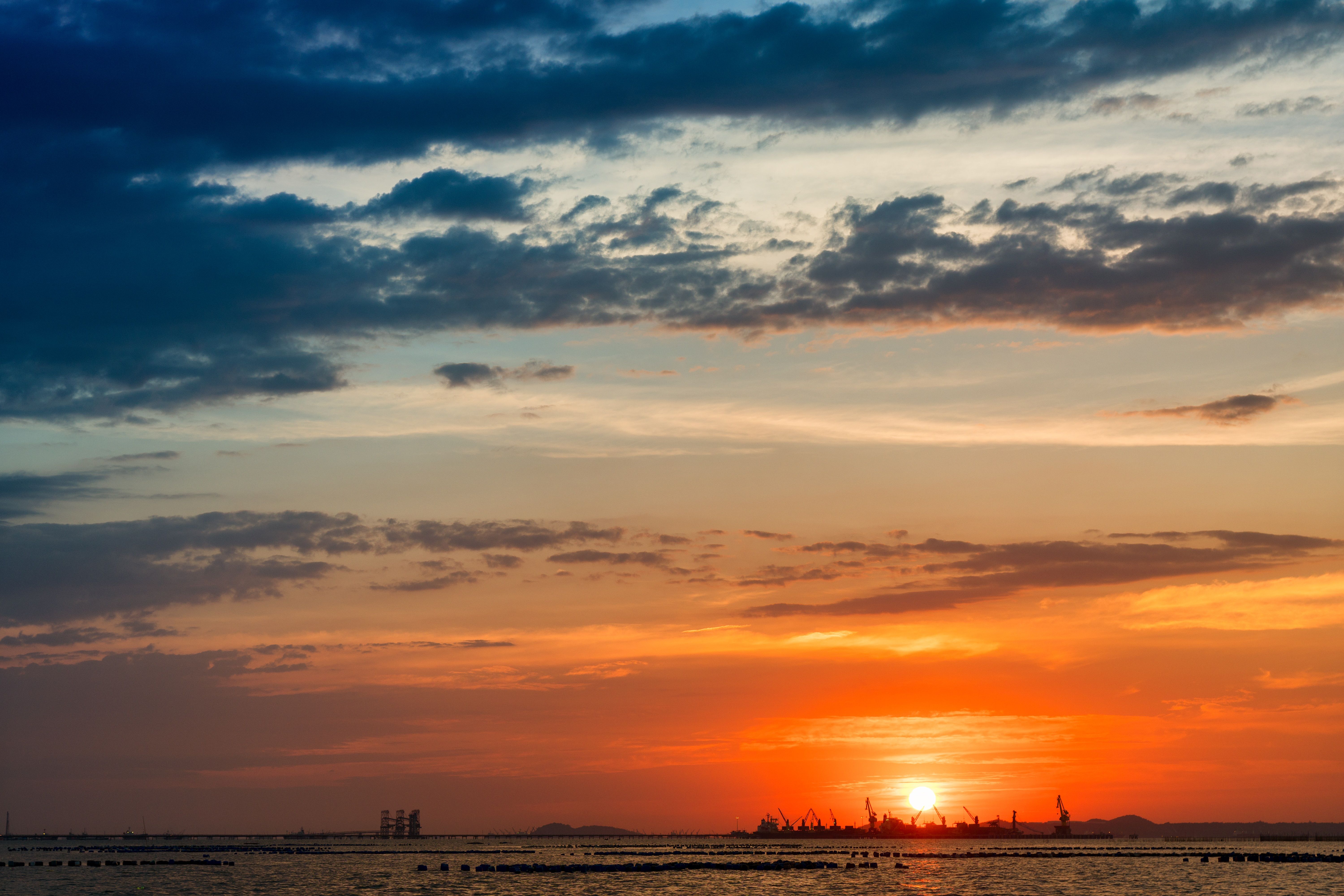
You see? The lighter part of the sky is not next to the sun, but under those dark clouds. In every case, the lighter layer is the part of the sky the sunlight becomes white, and hence the sky becomes light blue.
Impressive Clouds
Now, that’s a very popular subject. More so than the moon, I believe. You know what I’m talking about. Those impressive, “fat” clouds with lots of texture and many layers. Bob Ross painted lots of those and very skilfully so. His clouds looked so real one would hardly notice they were impossible. And many artists do the same.
OK! I tried to make an AI image of this subject, and what I got is far from convincing, but I hope that, at least, it will help you understand what I’m talking about.
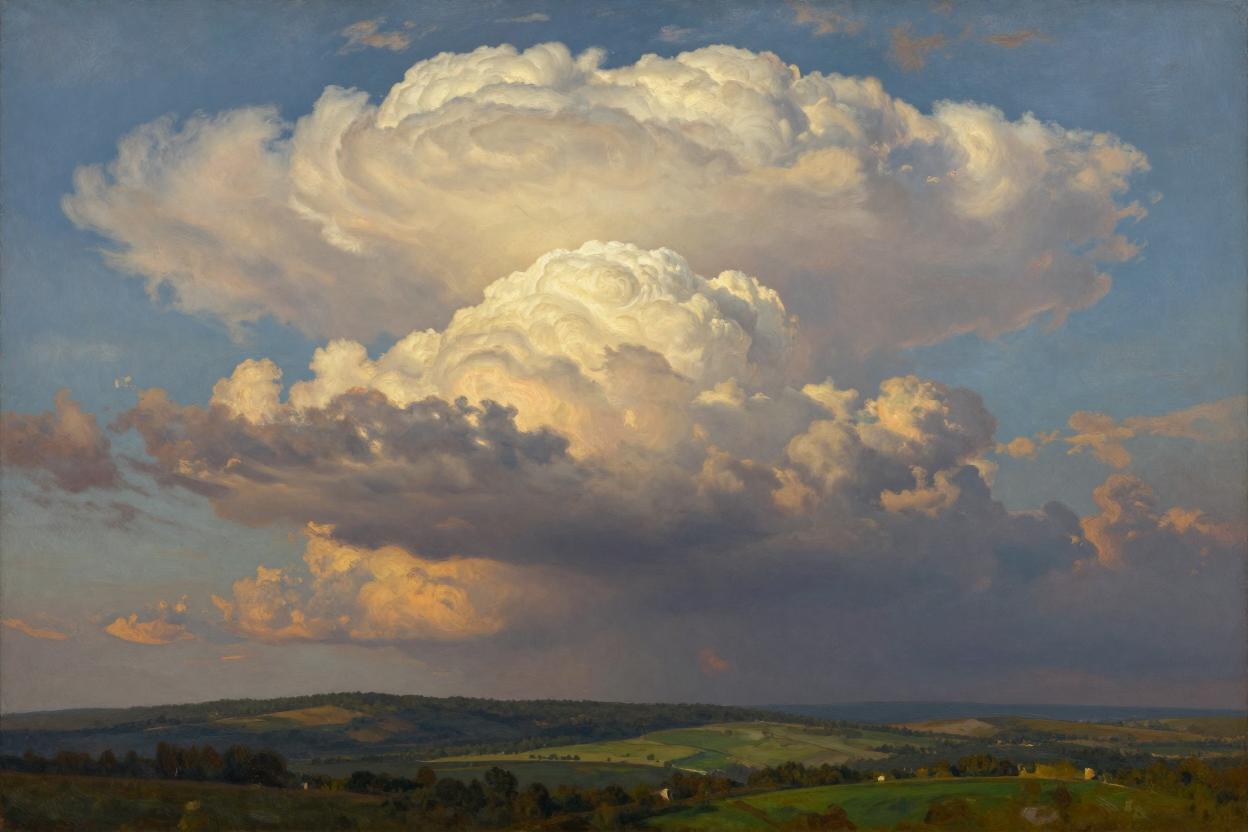
So, how do you make those impressive, fluffy clouds? You paint the first layer, then, on top of that and a little lower, the next layer and so on and so forth, until you make those clouds as fat, fluffy and impressive as you like. And they look awesome. Better than nature could ever make, dare I say. And actually nature literally can’t.
Because you see, the layer that is on top of the previous is closer to us. But! The lower we go in a painting (until we reach the horizon line), the farther what we see there is. Therefore, by painting the clouds this way, the front layer is the closest and the farthest away from us at the same time.
The only case – in reality, such as in a photograph – that the lower layer of the clouds will be on top of the higher layers is when those are clouds at different heights in the atmosphere. But then we don’t see those fat, multilayered clouds.
Masted Steamers
Ship sails are a difficult subject to paint – at least for me, but my main subject is the naked body, so maybe that’s why I think so – but if you do it right you can end up with a very impressive painting.
The mistake doesn’t occur when one paints sailboats or steamers. It only occurs when we see a painting that has both a steam engine and masts. A three-masted or four-masted steamer especially.
We usually see the sails fully set bellying forwards and the smoke of the engine trails back. That’s not correct though. And if you see paintings that were created after photography had advanced, you see that this mistake doesn’t occur as often as it did before photography. But since such ships have long stopped being used, more recent paintings often make the same mistake.
Before photography people didn’t have the luxury to observe those ships for long enough, while they could easily observe the trains. With trains, the smoke seems like it heads back because, in reality, the smoke goes straight up while the train moves a little forward. Then the next “cloud” of smoke rises and the train moves forward a bit more, and so on and so forth.
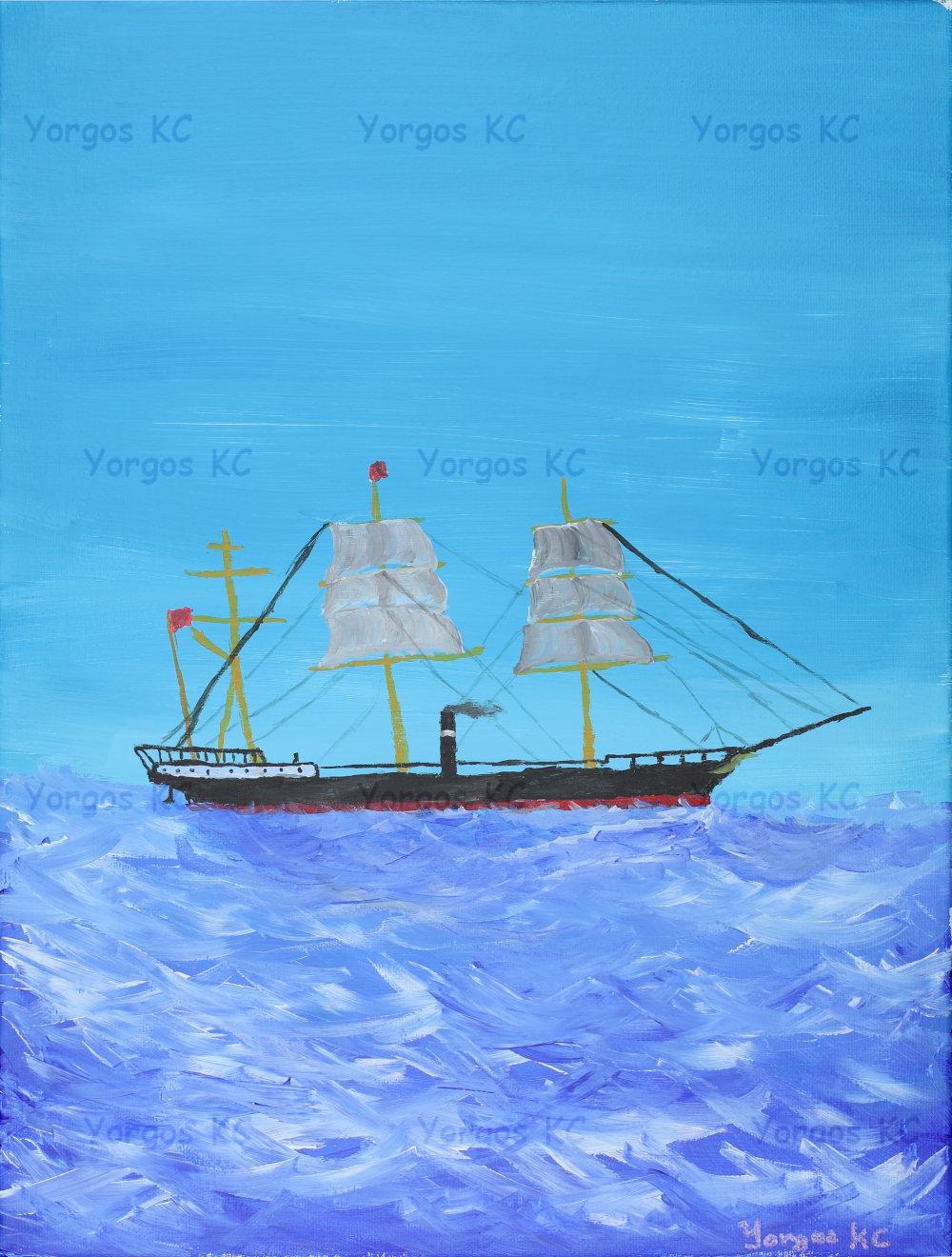
With masted steamers, though, the main force that moves the ship forward is this strong wind that blows the sails so impressively. Therefore the smoke of the engine is “taken” by the wind, too, and hence, it “heads” forwards. Like this painting which I made for the cover of “Demons on the Sea”.
Incidentally, photography helped correct many mistakes painters made before it. One famous example is the correction of the depiction of running horses. A fast galloping horse is difficult to observe – much more so than cats and dogs. Painters, before photography, more often than not depicted the horses galloping the same way dogs run, but horses don’t run the same way. They run like two humans in a row, one behind the other, with their legs moving in opposite rhythm.
That’s all. Have fun, be creative and, well… paint nudes, because you can’t go wrong with nudes!
Love and Kisses,
Yorgos KC


